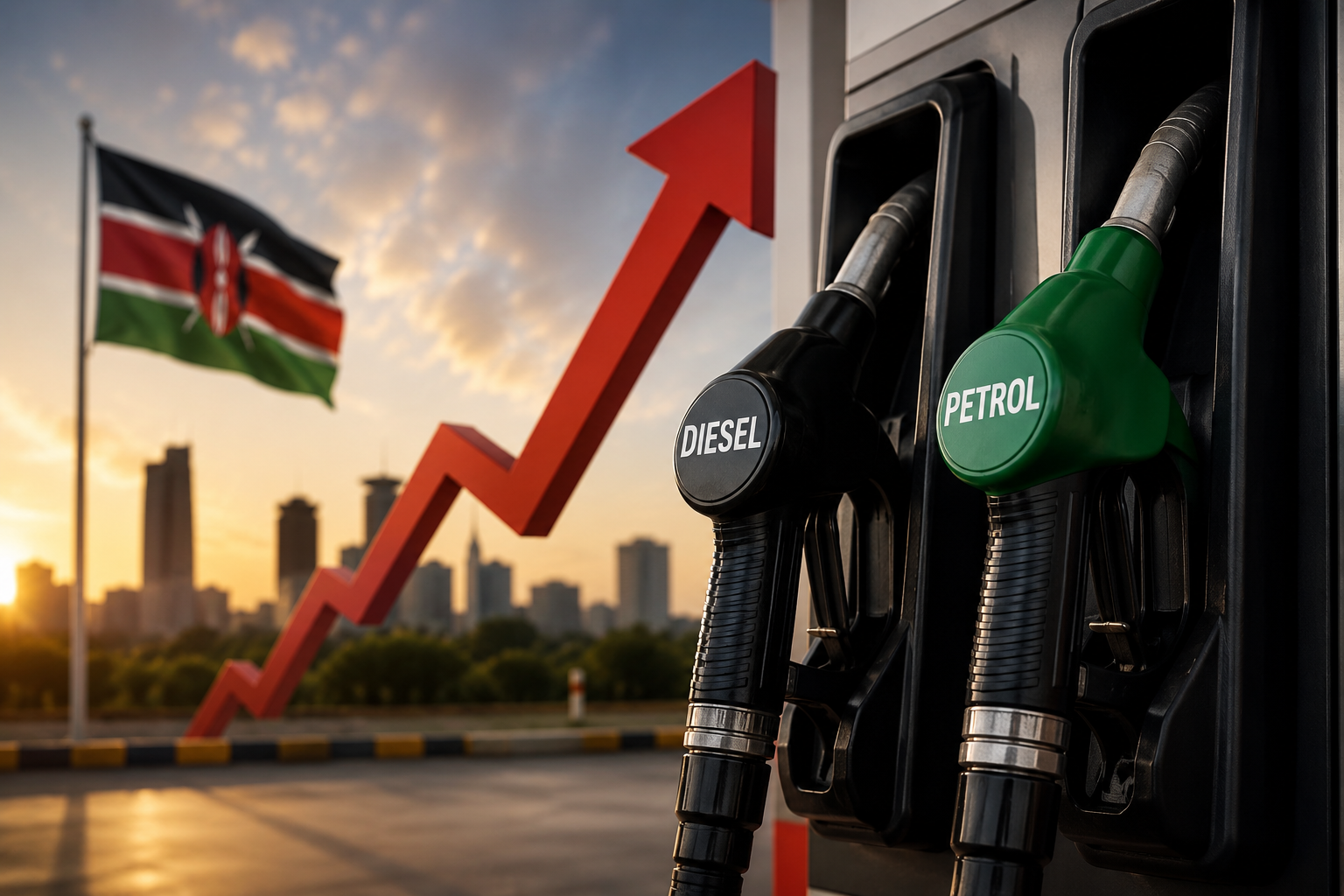
- Diesel jumped Ksh 46.29 in a single EPRA review cycle, the largest single increase in Kenya’s history, rising to Ksh 242.92 per litre in Nairobi.
- For the first time, diesel is now more expensive than petrol at the pump, inverting a decades-long pricing norm.
- Inflation hit 5.6% in April 2026, with transport costs surging 10%, and analysts warn the May fuel hike will push prices higher still.
Kenyans woke up on May 15 to fuel prices that have never been seen before. The Energy and Petroleum Regulatory Authority (EPRA) announced its latest monthly review, and the numbers were stunning: diesel in Nairobi is now priced at Ksh 242.92 per litre, up Ksh 46.29 in a single cycle, while petrol climbed to Ksh 214.25 per litre.
That is not just a record. It is the single largest price increase ever recorded in one EPRA review cycle. And in a historic first, Kenya fuel prices now show diesel costing more than petrol at the pump.
Why Diesel Matters More Than Petrol to Most Kenyans
Petrol powers personal cars. Diesel powers the economy.
Trucks move food from farms to markets on diesel. Matatus and buses run on diesel. Generators that keep hospitals, businesses, and homes running when power goes out consume diesel. Nearly every imported good that touches a Kenyan shelf gets there on the back of a diesel engine.
When diesel prices spike this sharply, the cost wave rolls through the entire economy within days. Transporters raise their rates. Logistics companies pass costs to retailers. Retailers pass them to consumers. Farmers who rely on fuel-powered irrigation and transport watch their margins collapse.
That is why the KSh 46 increase, coming on top of already elevated prices, has triggered alarm across business and consumer circles alike.
What Is Driving Kenya Fuel Prices to Record Highs?
Two forces are converging to push Kenya’s diesel price to historic territory.
First, the global oil shock. Escalating tensions involving Iran in early 2026 disrupted shipping through the Strait of Hormuz, a narrow waterway that carries roughly 20% of the world’s oil supply. Brent crude briefly surged past the $100 per barrel mark, and Kenya’s import costs for refined fuel jumped between 10% and 20% in a matter of weeks.
Second, the government’s unpaid subsidy bill. Reports indicate the government currently owes oil marketers approximately Ksh 17 billion in pending subsidy payments. That backlog has squeezed supply and reduced the cushioning effect that subsidies are supposed to provide.
The government cut VAT on petroleum products from 16% to 8% in April, a move that briefly pushed petrol down to Ksh 197.60 and diesel to Ksh 196.63. But the relief was short-lived. The scale of the global price shock simply overwhelmed the tax relief.
Inflation Is Already Accelerating, and May Data Will Be Worse
Kenya’s annual inflation rate climbed to 5.6% in April 2026, up sharply from 4.4% in March. The Kenya National Bureau of Statistics (KNBS) recorded a monthly jump of 1.4%, the sharpest monthly rise since April 2022.
Transport costs were the biggest driver, surging 10.0% year-on-year in April. Food and non-alcoholic beverages rose 8.8%. Together with housing and energy costs, these three categories account for over 57% of Kenya’s Consumer Price Index.
April’s data, however, only captured the earlier round of price increases. The May 15 fuel hike, particularly the Ksh 46 diesel surge, has not yet been reflected in any official inflation reading. When the Kenya National Bureau of Statistics releases May figures around May 29, the numbers are expected to be significantly worse.
The Central Bank of Kenya (CBK) has held its benchmark lending rate at 8.75% since February, pausing an easing cycle that had run for nearly a year. With inflation trending upward and fuel costs still elevated, the CBK’s Monetary Policy Committee (MPC) meets again on June 9, and a rate cut now looks increasingly unlikely.
The Political Fallout Is Intensifying
The price hikes have sharpened public anger toward the Ruto administration. Opposition figures have called the increases “economic terrorism,” demanded the resignation of the Energy Cabinet Secretary, and threatened fresh street protests.
Critics have also renewed scrutiny of the government-to-government (G-to-G) fuel import arrangements, with allegations of vested interests and poor planning. The recent partial privatisation of Kenya Pipeline Company, which handles fuel transportation from Mombasa to inland depots, has added to concerns, with analysts warning that commercial pressure on the newly listed entity could eventually translate into higher pipeline tariffs for marketers and consumers.
Government officials have maintained that global factors are the primary cause and that interventions have prevented even steeper increases. President Ruto’s administration notes that without the 8% VAT cut and Petroleum Development Levy subsidies, prices would be substantially higher.
What to Watch Next After Kenya Fuel Prices Spike
The next EPRA review is due around mid-June 2026. If Brent crude retreats from current levels and the shilling stabilises, there is room for a moderate reduction in Kenya fuel prices. But analysts caution that Strait of Hormuz tensions remain unresolved, and any new geopolitical disruption could push prices higher still.
For Kenyan businesses, consumers, and investors, the central question is no longer whether prices will hurt. They already are. The real question is how long the pain lasts.
Read More: Oil Market Volatility Surges as Kenyan Investors Rush to Reposition NSE Portfolios
Read more: What’s Next for KPC Share Price After MD Arrest in Substandard Fuel Probe
Read more: Kenya CBK MPC April 2026: Oil Shock and Rising Inflation Cloud Rate Decision