Kenya’s inflation edged higher in March 2026, reversing two months of easing, as the Central Bank of Kenya’s Monetary Policy Committee (MPC) prepares to meet on Wednesday, April 8. The timing could not be more loaded. With global oil prices surging on the back of the Iran-Israel conflict, analysts widely expect the CBK MPC to hold the Central Bank Rate (CBR) at 8.75%, pausing what has been the most aggressive monetary easing cycle in the bank’s history.
March Inflation Reverses Easing Trend
Kenya’s annual inflation rate rose to 4.4% in March 2026, up from 4.3% in February, according to data released by the Kenya National Bureau of Statistics (KNBS) on March 31. It was the first increase in three months, ending a run of consecutive declines.
On a month-on-month basis, consumer prices rose 0.5% in March, accelerating from 0.2% in February, a signal that price pressures are building at a faster pace than recent months suggested.
The headline number, however, still sits comfortably within the CBK’s medium-term target band of 2.5% to 7.5%.
The biggest driver was food and non-alcoholic beverages, which rose 7.7% year-on-year, contributing 2.2 percentage points of the total 4.4%. Tomato prices jumped 23.2% over the year to an average of KSh 99.60 per kilogram, while Irish potato prices rose 18.8% to KSh 107.16. Transport costs increased 3.8% annually, and housing, water, electricity, gas and other fuels rose 2.0%.
Core inflation, which strips out volatile food and fuel items, remained contained at 2.1%, suggesting that underlying price pressures are not yet broad-based. But non-core inflation stood at 10.8%, and that is precisely where the oil shock risk lives.
The April 15 Threat: EPRA’s First War-Era Price Review
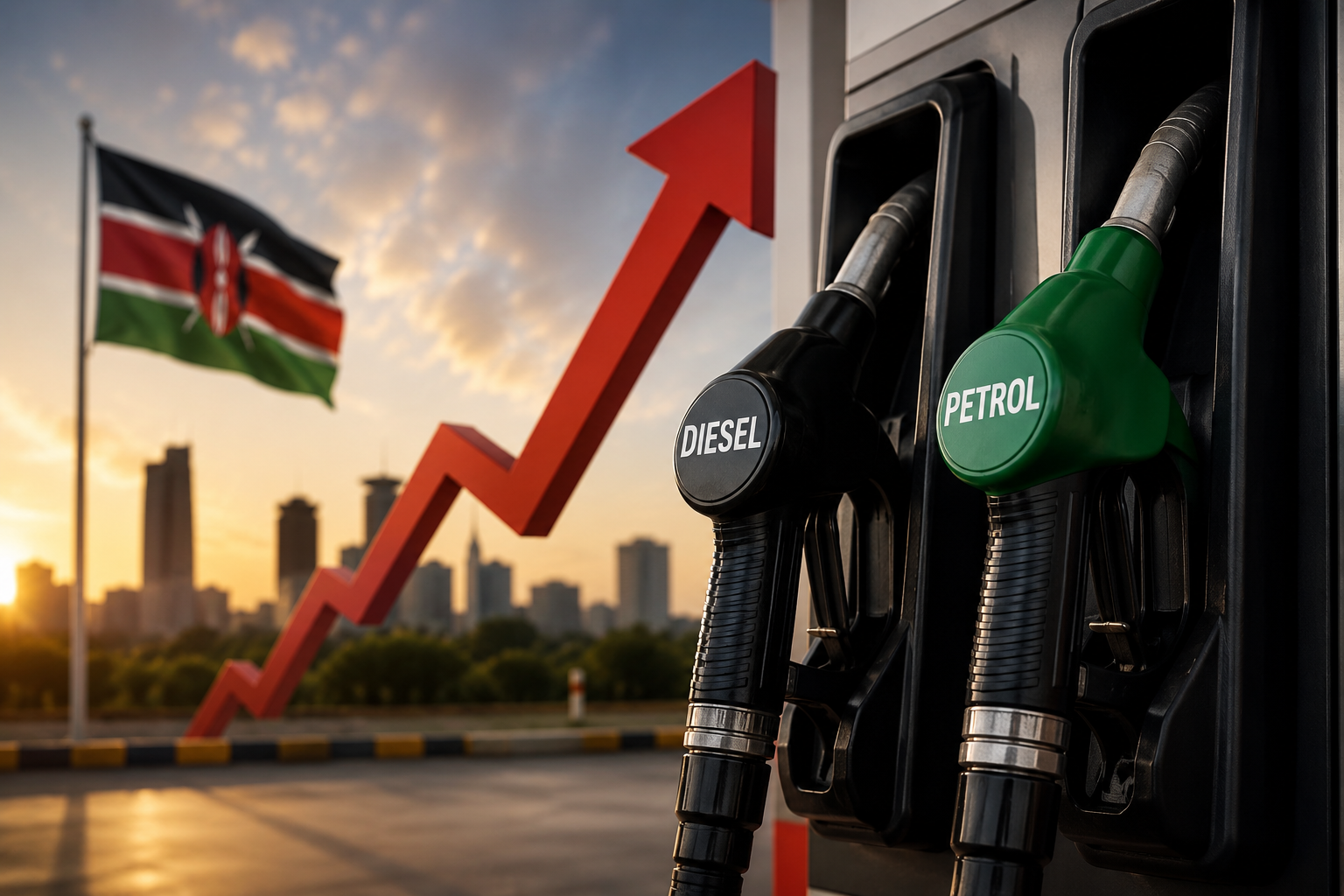
March’s CPI data was compiled before the full force of the Middle East conflict was captured in Kenya’s fuel import costs. The Energy and Petroleum Regulatory Authority (EPRA) held pump prices unchanged for the current cycle, but acknowledged that the pricing was based on February cargo data, figures that predate the war’s escalation.
The April 15 pump price review will be the first to fully reflect war-era crude pricing. Brent crude closed last week above $106 per barrel, up roughly 47% from pre-war levels, after Iran rejected direct peace talks with the United States. The cost of Murban crude, Kenya’s primary import grade, jumped 21% in a single week in early March.
If EPRA passes through even a portion of that increase on April 15, transport and energy costs, already elevated, will accelerate sharply. That would push non-core inflation higher and potentially drag headline inflation above 4.3% in April, complicating the MPC’s forward guidance.
The CBK’s Easing Cycle Now Faces Its Stiffest Test Amid Rising Inflation
The CBK MPC has delivered ten consecutive rate cuts since August 2024, reducing the CBR by a cumulative 425 basis points from 13.00% to 8.75%. The February 10 cut, the most recent, was framed by Governor Kamau Thugge as a continued commitment to private sector lending.
“This step is intended to support lending to the private sector and stimulate economic activity while keeping inflation expectations firmly anchored,” Thugge said at the time.
The MPC also noted in February that inflation was expected to remain below the 5.0% midpoint of the target range in the near term, supported by stable food and energy prices. That assumption is now under direct pressure.
Private sector credit growth had been responding well to the easing, improving to 6.4% in January 2026, while average commercial bank lending rates eased to 14.8% from 15.0% in October 2025.
Analysts Expect a Hold
Market consensus is firming around a pause. RMB Corporate and Investment Banking, writing on X ahead of the April 8 meeting, stated,
“Given the heightened geopolitical risks that could contribute to rising #inflation, we expect the Monetary Policy Committee (#MPC) to adopt a cautious stance and hold the Central Bank Rate (#CBR) at 8.75% at its upcoming meeting.”
The case for holding is not new. Ahead of the February meeting, the Kenya Bankers Association (KBA) had urged the MPC to keep the CBR unchanged, citing the need to allow previous cuts to fully transmit through the financial system.
“Keeping the CBR unchanged will allow the full transmission of previous cuts and ensure a non-disruptive transition of Kenya shilling variable-rate loans to the revised risk-based pricing framework,” the KBA said in a statement at the time.
That transmission argument has only strengthened since. The CBK’s revised Risk-Based Credit Pricing Model (RBCPM), which links commercial lending rates more directly to the CBR, became fully operational in March 2026. Policymakers may now prefer to let existing cuts work their way through the system before adding further stimulus into an oil-shock environment.
What to Watch on April 8
The CBK MPC meets on Wednesday against a complex backdrop: March inflation at 4.4% and rising, Brent crude above $106, an EPRA fuel review a week away, and an NSE that lost KSh 231 billion in its worst week since the COVID-19 pandemic. A hold would signal that the MPC is prioritising price stability and exchange rate defence over further growth stimulus. A cut, however unlikely, would be a bold signal of confidence in Kenya’s inflation trajectory.
The CBK’s next move will tell markets whether Kenya’s record easing cycle has run its course, or whether it is simply pausing for breath.