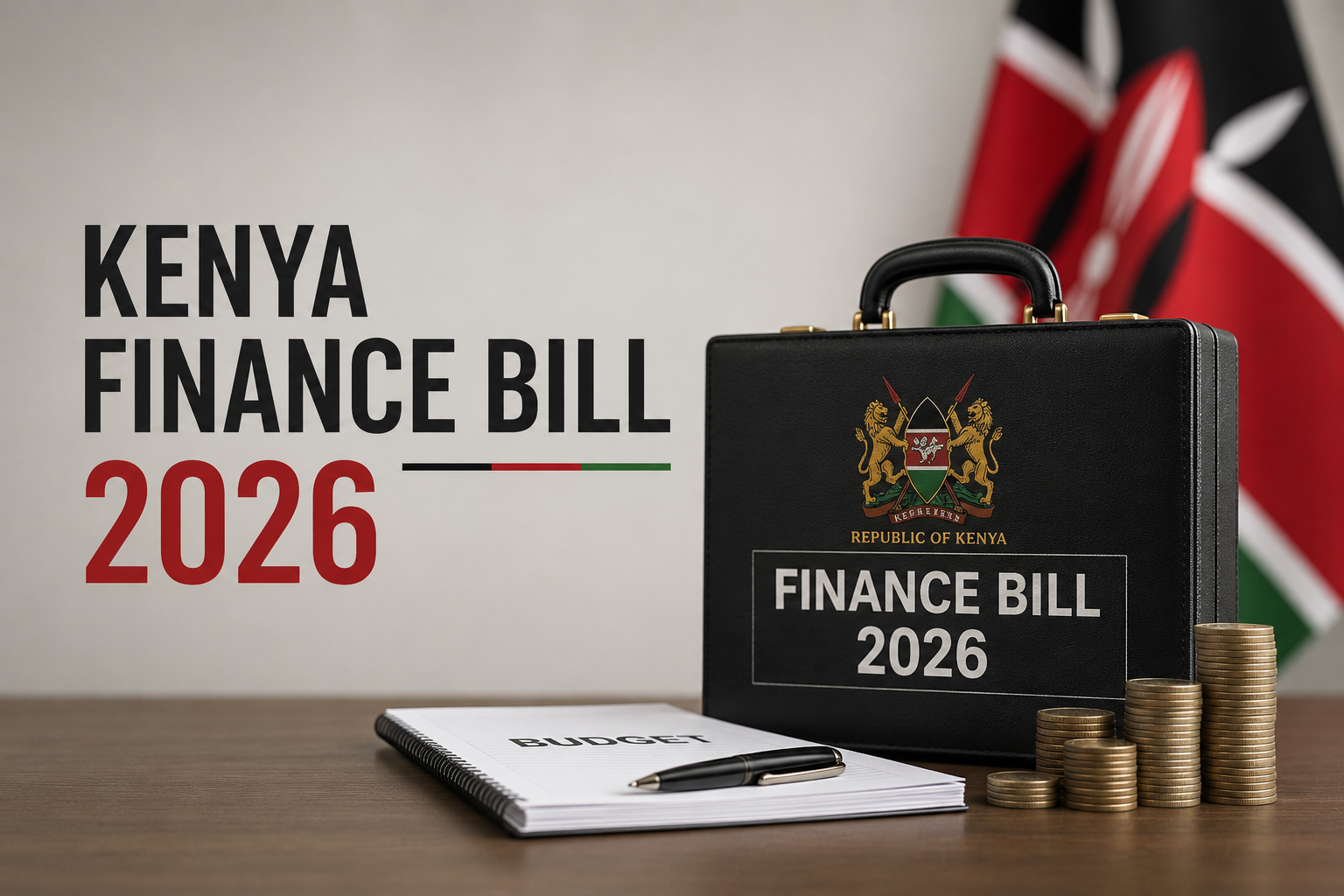
- The Kenya Finance Bill 2026 targets mobile money transactions, mitumba traders, and landlords with new or expanded tax measures
- Treasury CS John Mbadi insists the bill raises revenue without hiking rates by widening who pays, not how much
- Public opposition is growing, with critics warning of indirect cost increases for low-income Kenyans and small businesses
Kenya’s Finance Bill 2026 is making its way through Parliament, and the closer people look, the more they are pushing back.
Tabled in late April 2026, the bill is designed to raise approximately KSh 120 billion in additional revenue for the 2026/27 financial year. Unlike the explosive 2024 version that triggered Gen Z-led protests and was eventually withdrawn, this bill does not propose new taxes on bread, fuel, or basic goods.
But critics say it finds other ways to reach into Kenyans’ pockets through mobile money, second-hand clothes, rental income, and the digital economy.
What the Kenya Finance Bill 2026 Actually Proposes
The bill amends several key laws, including the Income Tax Act, the VAT Act, and the Excise Duty Act. On the surface, Treasury’s pitch is simple: expand who pays taxes, not how much they pay. Close loopholes. Automate enforcement. Bring the informal economy into the system.
But buried in the fine print are provisions that directly affect ordinary Kenyans.
Mobile money and digital payments are in the crosshairs. The bill proposes removing VAT exemptions on money transfers and payment processing services. That includes platforms like M-Pesa, which millions of Kenyans use daily to pay bills, send money, and run small businesses. If operators pass the cost on, which they likely will, transaction fees could rise.
Mitumba traders face a new presumptive tax. Under the bill, second-hand clothing imports would be taxed at a deemed 5% profit on customs value, paid upfront before goods are released. Traders do not get to wait and see how much they actually earn. They pay first. In a sector dominated by small-scale importers with thin margins, this could squeeze many out of business, or push prices higher for consumers who rely on affordable clothing.
Landlords are also targeted. The monthly residential rental income tax rate would rise from 7.5% to 10%. While the increase may seem modest, analysts warn it could quietly drive up rents in a market already under cost-of-living pressure.
There is also a proposal to impose a 25% excise duty on mobile phones, a measure widely criticised as regressive, given that phones are essential tools for banking, business, and communication across income levels.
The Government’s Case: Compliance, Not Confrontation
Treasury Cabinet Secretary John Mbadi has been clear about the bill’s philosophy.
“We are not looking at increasing tax rates,” Mbadi said. “Kenyans are the same, and the rates are still the same. We are looking at the possibility of expanding the base.”
That framing is important. The government argues that Kenya’s revenue problem is not about rates. It is about the large number of individuals and businesses that fall outside the tax net entirely. By targeting high-avoidance areas like digital payments, informal imports, and non-resident income, the Treasury says it is promoting a fairer system.
The bill also includes a tax amnesty covering liabilities up to December 2025, waiving penalties and interest for taxpayers who clear their principal by the end of 2026. That is a genuine olive branch for businesses and individuals carrying old debts.
Incentives for real estate investment through REITs, support for housing loans, and alignment with global minimum tax standards are also part of the package. It signals that the government is not entirely in extraction mode.
Why the Opposition Matters
Still, critics are not satisfied. Former Law Society of Kenya President Faith Odhiambo has flagged multiple concerns, including the shortened tax return filing deadline, moved from June 30 to April 30, which she argues is impractical for small businesses managing cash flow and records.
There is also a controversial deemed dividends rule that would allow the Kenya Revenue Authority to treat at least 60% of undistributed company profits as taxable dividends. Business groups warn that this discourages reinvestment and could damage investor confidence at a time when Kenya needs capital inflows.
Perhaps the biggest underlying complaint is what the bill does not include: relief for salaried workers. Many Kenyans expected a restructuring of PAYE tax bands to ease the burden on middle and lower-income earners. That relief is missing.
Kenya Finance Bill 2026: What Happens Next
The Finance Bill 2026 is currently in the committee stage, with public participation concluded. Parliament is expected to pass a version of the bill before June 30, 2026, with most provisions taking effect from July 1, 2026.
Amendments are still possible, and pressure from civil society, traders, and opposition MPs could reshape some of the more controversial clauses.
For now, the bill reflects Kenya’s fiscal reality: a government that needs revenue but cannot afford another public uprising. Whether that balance holds will depend on what Parliament decides in the weeks ahead.